Brake repairs & replacement in Durham
Squealing, grinding or a soft pedal? We check, repair and replace pads, discs, calipers and brake fluid on cars, vans and light commercials — with a clear quote before any work.
Book a brake check
Takes 60 seconds. We’ll call to confirm your slot.
Your brakes wear a little every time you stop
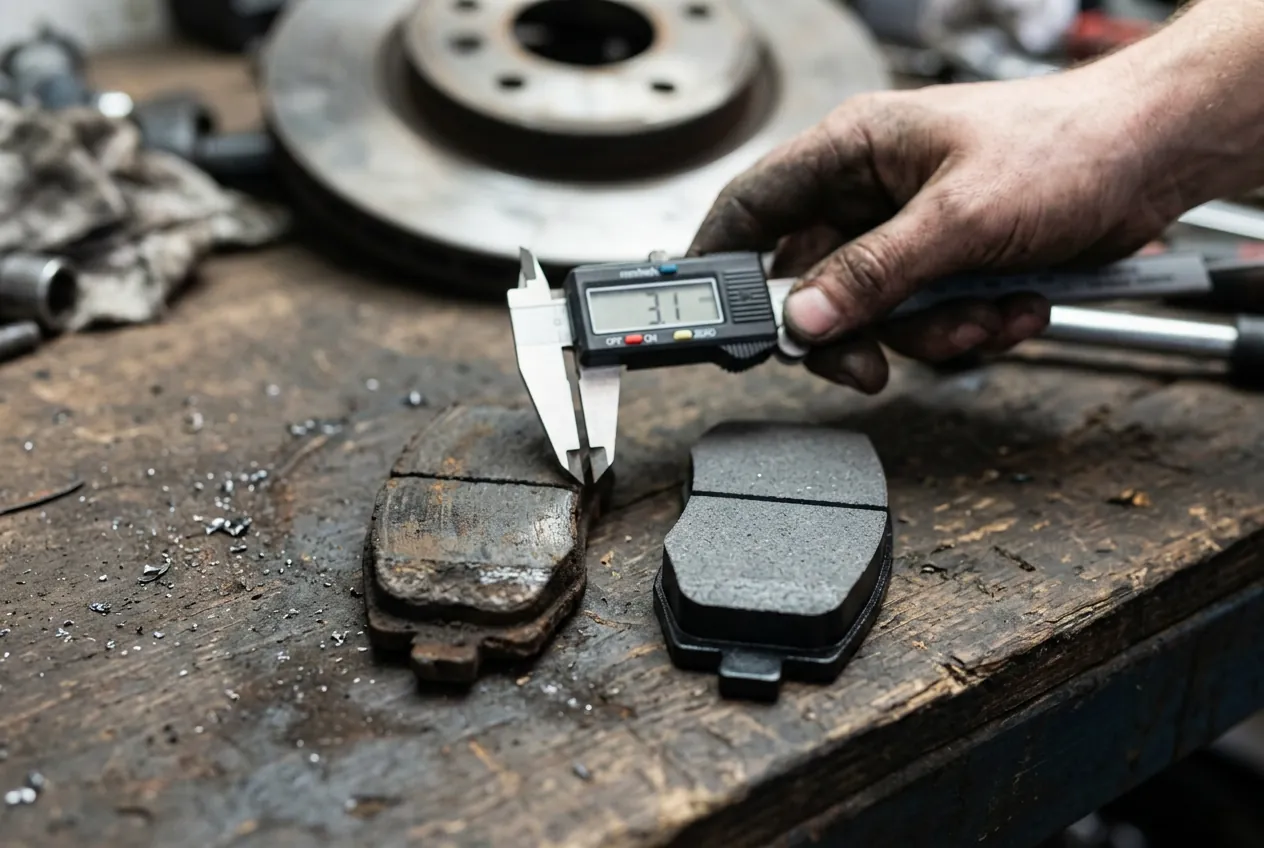
New brake pads typically start with around 10–12mm of friction material, and most manufacturers recommend replacing them at about 3mm. Discs have a minimum thickness stamped on them. Pads commonly last anywhere from 25,000 to 60,000 miles — loaded vans and stop-start town driving wear them much faster.
Brake fluid matters too. It absorbs moisture from the air over time, which lowers its boiling point. Under heavy or repeated braking it can boil, leaving a soft or sinking pedal. Most manufacturers recommend changing brake fluid every two years.
Brakes are one of the most common reasons vehicles fail their MOT. We check the whole system — pads, discs, calipers, hoses, pipes, fluid and handbrake — and explain exactly what needs doing and why.
Prices vary by vehicle and parts — we always quote before any work.
Worn brakes add metres you don’t have
Typical stopping distances for a car with good brakes on a dry road. In the wet, allow at least double — worn pads, glazed discs or old fluid add more on top.
| Speed | Thinking distance | Braking distance | Overall stopping distance |
|---|---|---|---|
|
20 mph
| 6 m | 6 m | 12 m (40 ft) |
|
30 mph
| 9 m | 14 m | 23 m (75 ft) |
|
40 mph
| 12 m | 24 m | 36 m (118 ft) |
|
50 mph
| 15 m | 38 m | 53 m (175 ft) |
|
60 mph
| 18 m | 55 m | 73 m (240 ft) |
|
70 mph
| 21 m | 75 m | 96 m (315 ft) |
Source: The Highway Code, rule 126 — typical stopping distances. Real-world distances vary with vehicle, load, tyres and road surface.
What happens as your brakes wear out
Brake problems rarely appear overnight. Catch them at stage one and it’s usually just pads — leave it and it gets more dangerous and more expensive.
Squealing
The pad wear indicator squeals against the disc — your early warning that pads are near the minimum.
Grinding
Friction material is gone and the metal backing plate grinds the disc. Discs get scored and usually need replacing too.
Vibration & pulling
Overheated or uneven discs cause a juddering pedal or steering wheel; a sticking caliper pulls the vehicle to one side.
Longer stopping
Worn pads, glazed discs or moisture in the fluid reduce braking force — you need more distance to stop.
Brake failure
Pads worn through, a leaking hose or boiling fluid can cause a soft, sinking pedal or total loss of braking.
Red brake light: pull over safely and call us — it can mean low fluid or a hydraulic fault. Amber ABS light: your brakes still work, but anti-lock may not — book in promptly.
Brake services for cars & vans
Everything from a set of pads to a full hydraulic overhaul — always in axle pairs, always tested before you collect.
Brake pads
Replaced in axle pairs with quality pads matched to your vehicle — including heavy-duty pads for loaded vans.
Brake discs
Replaced when below minimum thickness, scored or warped. Includes hub cleaning for a true, judder-free fit.
Calipers, hoses & pipes
Sticking calipers serviced or replaced; corroded pipes and perished hoses renewed.
Brake fluid change
Full flush and bleed with the correct DOT-spec fluid — recommended every two years.
Handbrakes & EPB
Cable adjustment, rear shoes and electronic parking brake diagnostics and resets.
ABS & warning lights
Fault codes read, ABS sensors and rings tested, warning lights properly fixed.
From first squeak to safe stopping
Book a brake check
Online or call — let us know what you’re hearing or feeling.
We inspect & measure
Pads and discs measured, calipers, hoses and fluid tested. You get a clear quote.
Fixed & road-tested
Quality parts fitted in axle pairs and every job road-tested before collection.
What customers say
“Brakes were squealing so I booked a check. They measured everything and showed me the pads needed doing, but the discs were fine.”
“Grinding noise on the front. New pads and discs fitted the same day at a fair price. Car stops like new.”
“Honest advice on pads vs discs and no pressure to spend more than I needed. Highly recommend.”
How do I know if my brakes need replacing?
Common signs are squealing or grinding when you brake, a vibrating pedal or steering wheel, the car pulling to one side, a soft or spongy pedal, longer stopping distances or a brake warning light.
How long do brake pads last?
Typically 25,000–60,000 miles, but it varies hugely with vehicle, load and driving style. Vans and town driving wear pads faster — we check them at every service.
Do discs always need replacing with pads?
Not always. Discs are replaced when they’re below the manufacturer’s minimum thickness, badly scored, corroded or warped. Pads and discs are always replaced in axle pairs.
How often should brake fluid be changed?
Most manufacturers recommend every two years, because the fluid absorbs moisture and becomes less effective.
Is it safe to drive with squeaky brakes?
A light squeak should be checked soon. Grinding, a soft pedal, pulling to one side or a red brake warning light mean stop driving and call us on 0191 591 3971.
Brakes sound or feel wrong? Get them checked
Book a brake check at our Bowburn workshop — we’ll measure, explain and quote before doing any work.